
Free written scope consultation - allowances, timeline, and change-order rules on paper before a single trade is scheduled






 Before
 After
After Before
 After
After Before
 After
AfterSilestone Roofing: The Escondido Owner’s Guide
Silestone roofing systems in Escondido typically run $8,000-$20,000 for full replacement and $400-$1,800 for targeted repairs, with most Silestone-compatible membrane and flashing parts available same-day through our local supply chain. We stock the full Silestone membrane series, color-matched flashing profiles, and proprietary fastening hardware - the components that most commonly fail in Escondido’s inland heat cycles, where summer roof surface temperatures regularly exceed 160°F. Most owners first notice a problem when water stains appear on ceiling drywall after Santa Ana wind events, or when the membrane shows alligator cracking along south-facing slopes that bake from 10 a.m. through sunset.
Which Silestone Models This Applies To
Silestone roofing is a composite membrane system, not a shingle brand - the name refers to the mineral-surfaced cap sheet and modified bitumen base layers manufactured under the Silestone trademark. In Escondido, we’ve installed and repaired three distinct generations: the original Silestone Classic (2002-2012, identifiable by the gray woven-fabric backer and stamped lot codes beginning with “SC”), the Silestone Plus series (2012-2019, with the blue release film and wider 39-inch rolls), and the current Silestone Pro line (2019-present, using the tan polymer core and integrated self-adhering seams).
The critical compatibility gotcha is the seam width: Classic used 4-inch overlap seams, Plus moved to 6-inch, and Pro uses 8-inch with a heat-welded tab. You cannot patch a Classic system with Pro membrane - the thickness differential (2.3 mm vs. 3.1 mm) creates a ridge that traps water. We carry OEM Silestone membrane in all three specs, plus aftermarket equivalents from Mule-Hide and Johns Manville that meet the same ASTM D6162 Type I standard at roughly 15% lower material cost. The aftermarket decision comes down to warranty: Silestone OEM carries a 15-year material warranty when installed by a certified applicator, while the equivalent aftermarket membrane warranties at 10 years. For a roof at year 12 with localized damage, aftermarket often makes sense. For a system at year 5 with widespread seam failure, OEM replacement protects the remaining warranty term.
To identify your system, check the mechanical room or garage for the original contractor’s documentation - Silestone requires a registered installation certificate for warranty validity. If that’s missing, peel back a corner of the membrane at a roof penetration (vent pipe, skylight curb) and measure the total thickness with a caliper: Classic reads 2.3 mm, Plus 2.7 mm, Pro 3.1 mm.
Signs Your Silestone Roofing Is Failing
- Alligator cracking on south or west slopes. The Silestone cap sheet uses a mineral granule surface over modified bitumen; after 8-12 years of Escondido UV exposure, the bitumen oxidizes and shrinks, creating a cracked pattern that resembles alligator hide. This is cosmetic until the cracks penetrate to the reinforcement layer - at that point, water enters the system.
- Blisters that crack open after summer heat. Moisture trapped between membrane plies vaporizes in 160°F+ surface temperatures, forming raised blisters. Intact blisters are not yet leaks; cracked blisters are active failure points that require patch replacement of the affected ply.
- Seam separation along roll ends. Silestone systems rely on adhesive or heat-welded seams; thermal cycling in Escondido’s 40°F winter lows to 160°F summer highs fatigues the bond. Separation begins as a hairline gap, progresses to lifted edges, and eventually admits wind-driven rain during Santa Ana events.
- Soft spots near drains or scuppers. The modified bitumen base layer breaks down where standing water accumulates. In Escondido, flat roof sections with inadequate slope toward drains are the typical location - we see this most often on additions built in the 2005-2010 period when drain placement was sometimes prioritized over proper slope.
- Interior stains that appear after wind, not rain. This pattern indicates membrane lift at the perimeter or penetration flashings. Santa Ana winds create negative pressure that pulls the membrane edge away from the substrate; rain then enters through the gap. The stain location rarely aligns with the actual leak point, which complicates homeowner diagnosis.
BeforeAfterReplacement Cost & What’s Included
For Silestone roofing in Escondido, our installed pricing follows the ranges below - every figure is a flat written price with scope, delivered before work starts under Clause 1 of the Haven Standard.
| Service | Price Range | Typical Scope |
|---|---|---|
| Targeted membrane patch (up to 25 sq ft) | $400-$900 | Cut out failed section, replace with matching membrane, reseal seams, photo documentation |
| Flashings replacement (per penetration) | $350-$800 | Remove degraded flashing, install new Silestone-compatible base and counter flashing, seal |
| Partial re-sheet (up to 500 sq ft) | $2,500-$6,000 | Remove cap and base sheets, inspect substrate, install new plies, integrate existing membrane |
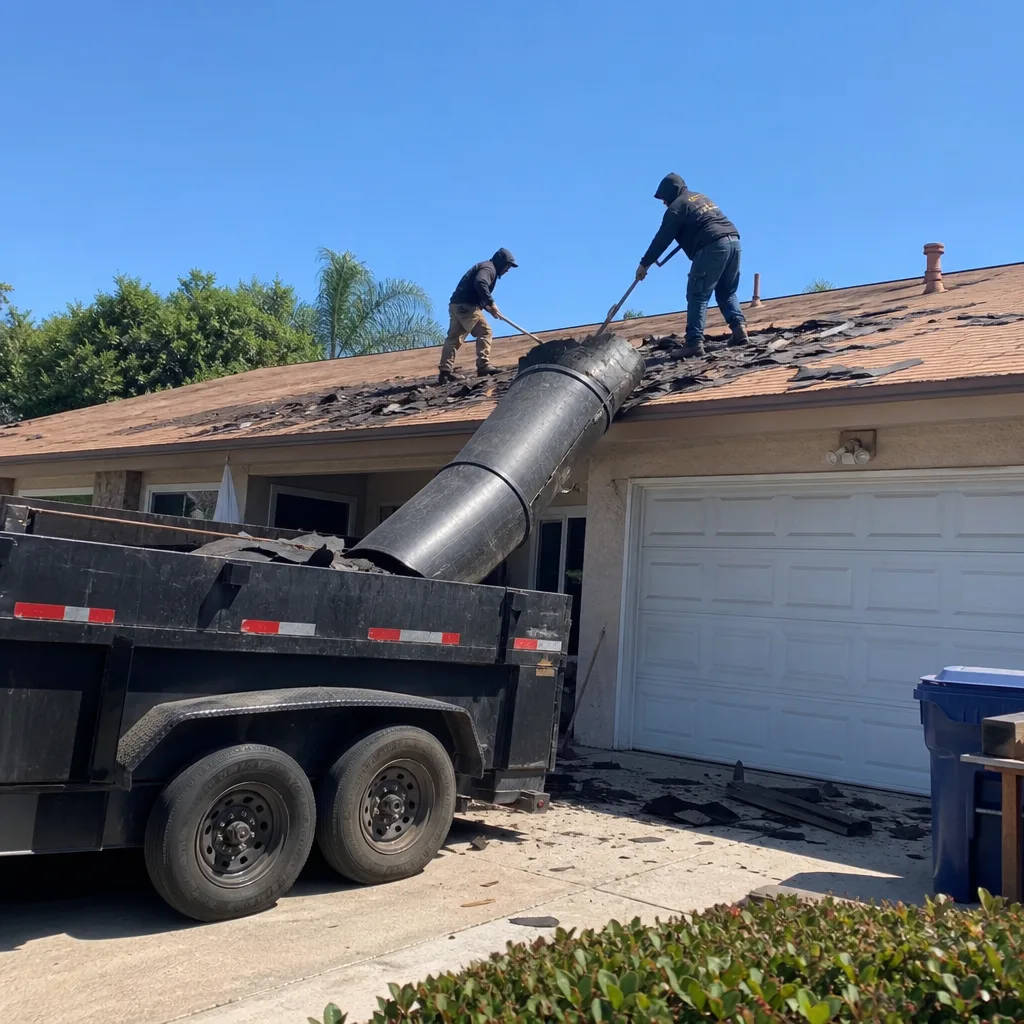
| Full Silestone roof replacement | $8,000-$20,000 | Complete tear-off, substrate repair as needed, new Silestone Pro or equivalent system, 15-year warranty |
What drives the range: substrate condition (plywood or OSB replacement adds $3-$5 per square foot), access difficulty (steep pitches or multi-story require scaffolding), and whether the existing system contains asbestos-containing felt (pre-1990 installations in Escondido’s older neighborhoods near Grand Avenue sometimes do - abatement adds $2-$4 per square foot). Every quote includes a documented photo record of substrate condition before we cover it, and no change to that substrate repair scope proceeds without a signed change order. Our 365-Day Done Right Promise covers the workmanship; the Silestone OEM material warranty covers manufacturing defects when we register the installation.
DIY or Call Us?
There’s a safe middle ground and a hard stopping point with Silestone membrane repair. What you can check yourself: walk the roof (or hire a drone operator - we see more of this in Escondido’s hillside neighborhoods near Daley Ranch) and photograph any cracking, blistering, or seam gaps. Mark the locations with chalk. Check the attic or ceiling cavity for fresh water staining after the next rain. This documentation helps any contractor quote accurately.
Where DIY goes wrong: Silestone membrane installation requires open-flame propane welding or hot-air welding equipment operating at 600°F+ to activate seam adhesives and create proper bonds. The modified bitumen material itself is flammable until cooled. We’ve responded to two Escondido homes in the past three years where homeowner torch work ignited the dry underlayment - one resulted in significant structural damage. Additionally, walking a compromised membrane without proper fall protection on slopes over 4:12 pitch is genuinely dangerous. We carry $2 million general liability and workers’ compensation specifically because this work carries real risk. Call (858) 683-6538 and we’ll schedule a free estimate with written pricing - no charge to look, no pressure to proceed.
FAQs
In Escondido’s inland climate, a properly installed Silestone Classic system lasts 12-15 years, Plus extends to 15-18 years, and Pro is rated at 20 years with annual inspection. The limiting factor is UV degradation of the cap sheet granules - once those erode, the bitumen beneath oxidizes rapidly. South-facing slopes typically fail 3-5 years before north-facing sections on the same roof. Call (858) 683-6538 for a free condition assessment and exact replacement timeline.
Yes, if the failure is localized and the remaining membrane retains adequate thickness. We patch when less than 30% of the total roof area shows active failure and the base layer is still sound. Once alligator cracking covers more than half the surface or multiple seam failures appear across different roof planes, partial or full replacement becomes more cost-effective than repeated patchwork. We quote both options when the condition is borderline. Call (858) 683-6538 for a written comparison.
A targeted patch or flashing replacement completes in one day. Partial re-sheeting up to 500 square feet typically takes two days - one for tear-off and substrate repair, one for membrane installation and curing. Full replacement runs three to five days depending on square footage, with a one-day weather hold built into the schedule for Escondido’s occasional winter rain. We don’t start tear-off if rain is forecast within 24 hours; exposed substrate absorbs moisture that compromises the new membrane bond. Call (858) 683-6538 to check current scheduling.
We stock Silestone-compatible membrane in all three generations, color-matched flashing profiles for the standard Escondido pallet (white, tan, and weathered wood), and the proprietary fastening plates and termination bars. Specialty colors or the Silestone Cool Roof series (the highly reflective white cap for Title 24 compliance) typically arrive next business day from the San Diego distribution center. For emergency tarping and temporary weatherproofing, we carry universal peel-and-stick membrane that integrates with any Silestone system until permanent repair materials arrive. Call (858) 683-6538 - we can confirm exact part availability for your model while you’re on the line.
Rowan Construction Group Escondido is an independent service provider and is not affiliated with, endorsed by, or a certified distributor of Silestone products. We source Silestone-compatible materials through standard wholesale channels and install to manufacturer specifications.
Written by Grant Rowan, Owner, Rowan Construction Group Escondido at Rowan Construction Group Escondido, serving Escondido and nearby areas.