
Last updated September 25, 2026
Free written scope consultation - allowances, timeline, and change-order rules on paper before a single trade is scheduled





 Before
 After
After Before
 After
After Before
 After
AfterHow to Hire a Construction Contractor in Escondido: A Step-by-Step Guide
The California State License Board shows 23 complaints filed against Escondido-area contractors in a recent 24-month window. Most trace to one of three contract failures: no written change order clause, no lien release requirement, and no payment schedule tied to inspections. This complete guide to construction in Escondido gives you a documented checklist for confirming license status, insurance certificates, permit history, and contract language before signing anything. Hiring a contractor in Escondido is a verification process, not a charm contest, and the homeowners who finish on budget are the ones who treated it that way from the first phone call.
Quick Answer
To hire a construction contractor in Escondido, verify their CSLB license and active bond online, request a Certificate of Insurance showing current workers’ compensation coverage, pull their permit history through Escondido Development Services to confirm projects closed with final inspection, and sign only a contract containing line-item pricing, signed change orders for any modification, conditional lien releases tied to each payment, and a written dispute resolution process. Get three written bids and compare them with a scope matrix, not by price alone.
Table of Contents

- How to Verify a CSLB License in Escondido
- How to Check Permit History Through Escondido Development Services
- How to Request and Read Insurance Certificates
- The Four Contract Clauses That Protect Escondido Homeowners
- What a Legitimate Bid Document Contains (and What a Vague Bid Signals)
- How to Compare Three Bids Without Defaulting to Lowest Price
- Escondido-Specific Considerations: Climate, Codes, and Neighborhoods
- Common Mistakes to Avoid
- When to Call a Professional
- Frequently Asked Questions
BeforeAfterHow to Verify a CSLB License in Escondido
Every legitimate construction contractor in California must carry a CSLB license for projects exceeding $500 in combined labor and materials. The license number should appear on every bid, business card, and contract page. Here’s how to verify it properly, not just glance at it.
Step-by-Step CSLB Verification
- Go to checkthelicensefirst.com and enter the six- or seven-digit license number.
- Confirm the classification matches your project type. A B-General Building contractor can oversee whole projects but must use specialty subcontractors for electrical, plumbing, and HVAC work. A C-36 Plumbing contractor cannot legally frame your addition. For kitchen remodeling or home additions in Escondido, you’ll typically see B-General Building with C-36, C-10, and C-20 subcontractors named in the contract.
- Check that license status is “Active”, not suspended, expired, or revoked.
- Verify the bond is current. California requires a $25,000 contractor’s bond, but the CSLB page shows the actual bond expiration date. A bond that lapsed last month means the contractor is working illegally today.
- Confirm workers’ compensation insurance is listed as active. If the contractor has no employees, they may file an exemption, but any crew on your property without workers’ comp becomes your liability if someone gets hurt.
- Scroll to disciplinary actions. Even a single citation for contracting without a license or abandoning a project should end the conversation.
- Cross-reference the business name and address on the CSLB record with what’s on the bid. Mismatches suggest a borrowed license or shell operation.
In our experience across 4,000-plus projects, the homeowners who verify before calling for estimates avoid the contractors who can’t produce documentation. We’ve had Escondido residents tell us they eliminated half their candidate list at this step alone. The 15 minutes spent on checkthelicensefirst.com pays back in avoided litigation.
One detail competitors rarely mention: the CSLB shows personnel changes. If the qualifying individual (the person who passed the license exam) left the company six months ago and no replacement is listed, the license may be in administrative limbo. That’s not a contractor you want framing your second story.
How to Check Permit History Through Escondido Development Services
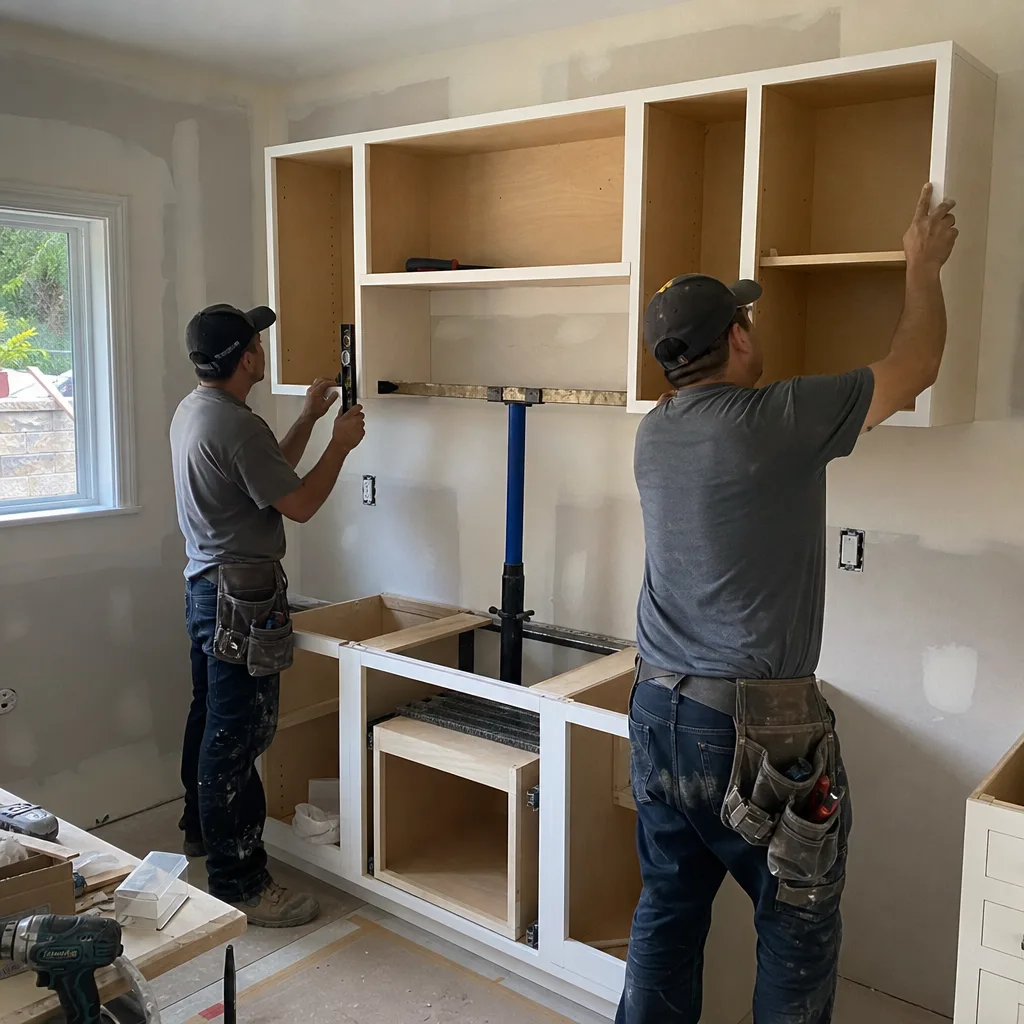
A contractor’s permit history tells you whether they finish what they start. Escondido Development Services maintains public records of every permit pulled within city limits. Here’s how to read them.
Requesting the Record
Visit the Escondido Development Services counter at City Hall or use the online permit portal. Search by contractor license number or business name. You’re looking for projects from the past 36 months, which gives you enough data without catching outdated crew compositions.
What the Record Shows
- Permit number and address - verify these are real properties, not post office boxes or the contractor’s own home.
- Permit type - B100 for new construction, B200 for additions and remodels, B300 for repairs. A contractor claiming extensive kitchen remodeling experience should show a pattern of B200 permits, not just B300 handyman jobs.
- Issue date and final inspection date - the gap between these dates reveals project duration. A six-month gap on a bathroom remodel suggests either complexity or dysfunction.
- Status - “Finaled” means the city signed off. “Expired” or “Cancelled” means the permit lapsed without completion. “Open” with no recent activity for months suggests a stalled project the contractor never closed out.
We’ve reviewed competitor permit histories for Escondido homeowners who brought us Free Second Opinion requests. One contractor had four open permits over two years old, all in the kitchen remodeling category. The homeowner had no idea. In Escondido’s older neighborhoods like Old Escondido and the area around Grape Day Park, permit complications are common, 1920s-era setbacks and non-conforming structures require creative solutions. A contractor with a pattern of expired permits in these zones may lack the problem-solving experience your project demands.
The ratio that matters: final inspections divided by permits issued. Below 85% is a red flag. Above 95% with reasonable timelines suggests a contractor who understands Escondido’s inspection schedule and builds to pass the first time.
How to Request and Read Insurance Certificates
Insurance certificates are not decorations. They’re legal documents that determine who pays when something goes wrong. Here’s how to request them and what to verify.
Making the Request
Ask for a Certificate of Insurance (COI) directly from the contractor’s insurance broker, not a photocopy from the contractor’s file. The broker’s email or fax number should be on the contractor’s website or available on request. This prevents altered documents.
Reading the COI
- General Liability - minimum $1 million per occurrence, $2 million aggregate for residential construction. Check the expiration date; policies renew annually.
- Workers’ Compensation - mandatory in California if the contractor has employees. The class code should match construction, not clerical work. A 8810 (clerical) code with a framing crew is a misrepresentation that voids coverage.
- Additional Insured - your name and property address should appear as “Certificate Holder” and ideally as “Additional Insured.” This gives you direct rights under the policy.
- Waiver of Subrogation - prevents the insurer from suing you to recover payments. Standard on commercial jobs, rare on residential, but worth requesting.
Call the broker to verify the policy is currently in force. We’ve encountered expired policies presented as current, and one case where the contractor had never paid the premium despite receiving a certificate. The five-minute phone call is non-negotiable.
In Escondido’s hilly terrain, particularly in neighborhoods like Felicita and the area northeast of Daley Ranch, site access complications increase liability exposure. Steep driveways, retaining walls, and tight setbacks make workers’ comp and general liability especially critical. A contractor minimizing coverage in these zones is gambling with your assets.
The Four Contract Clauses That Protect Escondido Homeowners
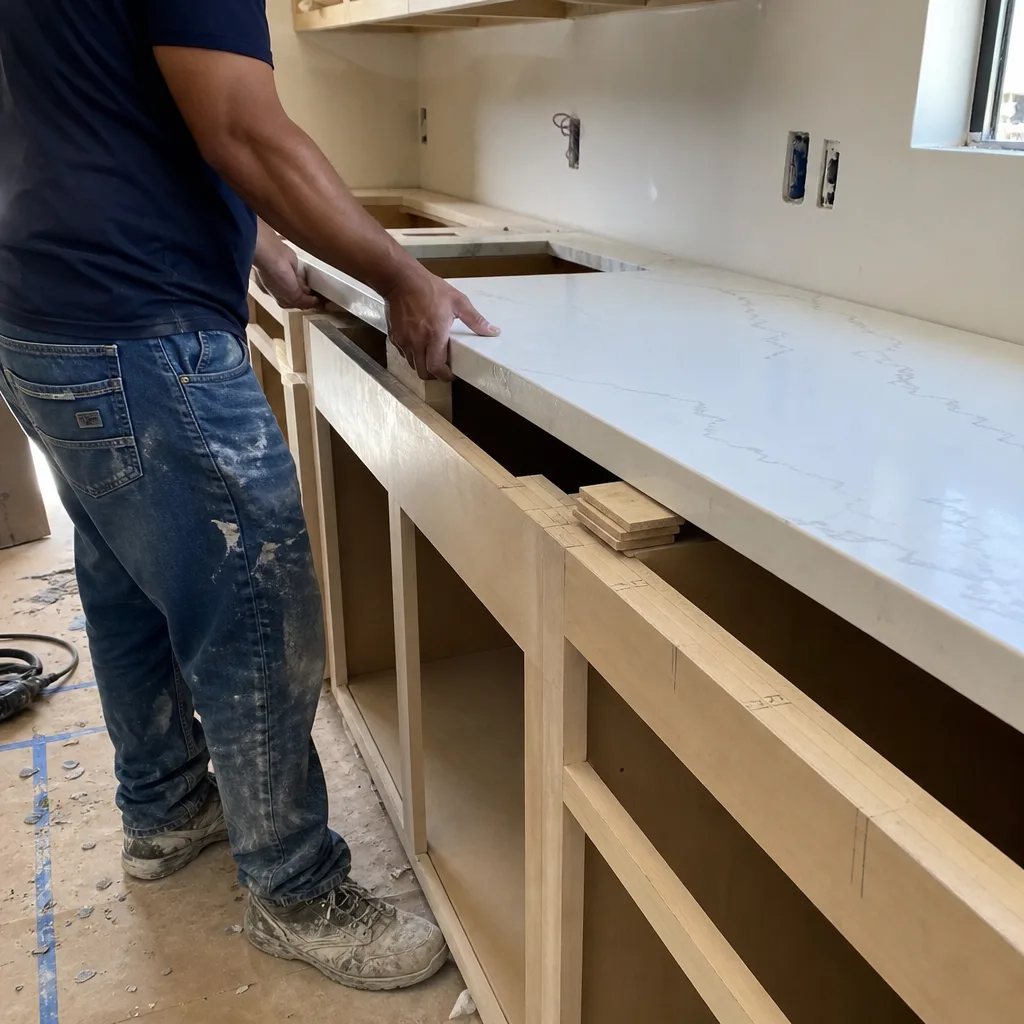
The CSLB complaint data is clear: contract failures, not craftsmanship failures, drive most disputes. These four clauses separate professional contracts from liability traps.
1. Signed Change Orders for Any Modification
Every change to scope, material, or timeline must trigger a written change order signed by both parties before work proceeds. Not after. Not “we’ll figure it out at the end.” The change order states the new price, the new scope, and the impact on schedule.
At Rowan Construction Group, this is Clause 1 of The Haven Standard: no work proceeds on a change until the change order is signed. This administrative discipline, acquired by Haven when they brought us into the portfolio, is why our projects finish within a few percent of the agreed price. We’ve seen Escondido homeowners hit with 40% overruns because their contractor treated verbal approvals as binding. They’re not. In California, the Home Improvement Contract law requires written change orders for any price increase exceeding $500 or 10% of the original contract, whichever is less. A contract without this clause is already non-compliant.
2. Conditional Lien Releases Tied to Each Payment
California mechanics lien law lets contractors and suppliers file liens against your property for unpaid work. A conditional lien release states that the signer waives lien rights if and when the specified payment clears. You exchange the release for the payment, not the other way around.
Your contract should require:
- A conditional release from the general contractor with each progress payment
- Conditional releases from every named subcontractor and material supplier
- A final unconditional release upon completion and final payment
Without these, a subcontractor your contractor never paid can lien your Escondido home even though you paid the general in full. We’ve reviewed competitor contracts missing this entirely. It’s not optional.
3. Payment Schedule Linked to Inspection Milestones
Never pay more than 10% or $1,000 (whichever is less) as a deposit. The remaining payments should tie to verified inspection milestones: foundation inspection passed, framing inspection passed, final inspection passed. Not “half up front, half on completion.” Not weekly draws regardless of progress.
Escondido Development Services inspects at rough framing, insulation, and final for most remodels. Your payment schedule should mirror this. A contractor demanding 50% before rough inspection is either undercapitalized or planning to disappear.
4. Written Dispute Resolution Process
The contract should specify mediation before litigation, with a named mediation service and cost allocation. California’s mandatory mediation provisions for home improvement contracts give you leverage, but only if the contract references them. A vague “parties agree to work out disputes in good faith” is worthless. Name the process, name the provider, state who pays.
What a Legitimate Bid Document Contains (and What a Vague Bid Signals)
A bid is a legal offer. It should read like one. Here’s what belongs in the document, line by line.
Required Elements
- Line-item labor and material breakdowns - not a single lump sum. You need to see that demolition is $4,200, cabinets are $8,600, installation labor is $3,400. This lets you compare apples to apples and spot missing scope.
- Named material brands and model numbers - “cabinets” is not a specification. “KraftMaid Maple Shaker, Dove White, soft-close hinges, model KMC-SH-2430” is. For countertops, the bid should state Cambria, Silestone, Caesarstone, or another named brand with color and thickness. For fixtures, Kohler or equivalent with collection name.
- Named subcontractors with their CSLB license numbers for electrical, plumbing, and HVAC work. A general contractor who won’t name subs is either using unlicensed labor or marking up unknown amounts.
- Permit costs specified separately, with a note that permits are pulled by the contractor and inspections scheduled.
- Start date and substantial completion date, with definitions for both. “Start date” means first day of demolition, not the day you sign. “Substantial completion” means the project is usable, even if punch list items remain.
- Warranty terms - duration, coverage scope, and process for claims. Not “we stand behind our work.” Years, items, and a phone number.
- Payment schedule tied to milestones, as detailed above.
- License number, bond information, and insurance carrier on every page.
Red Flags in Bidding
A bid that says “complete kitchen remodel: $45,000” with no breakdown is not a bid. It’s a guess. A bid that says “allowance: $5,000 for cabinets” without specifying grade or brand is a cost-shift to you. A bid with no permit line item suggests unpermitted work, which voids your homeowner’s insurance and complicates resale in Escondido’s disclosure-heavy market.
We’ve had Escondido homeowners bring us competitor bids with material allowances 30% below market rate for the specified quality. The contractor either plans to upgrade you mid-project or install inferior product. The written price before any work starts is meaningless without written specifications.
Our Free Second Opinion on Any Written Estimate exists for this exact scenario. Bring us a competitor’s line-item bid and we’ll review it against current material costs and standard labor units, at no charge. We’ve found $12,000 in hidden omissions on a single bathroom remodeling bid from a competitor in the Escondido area.
How to Compare Three Bids Without Defaulting to Lowest Price
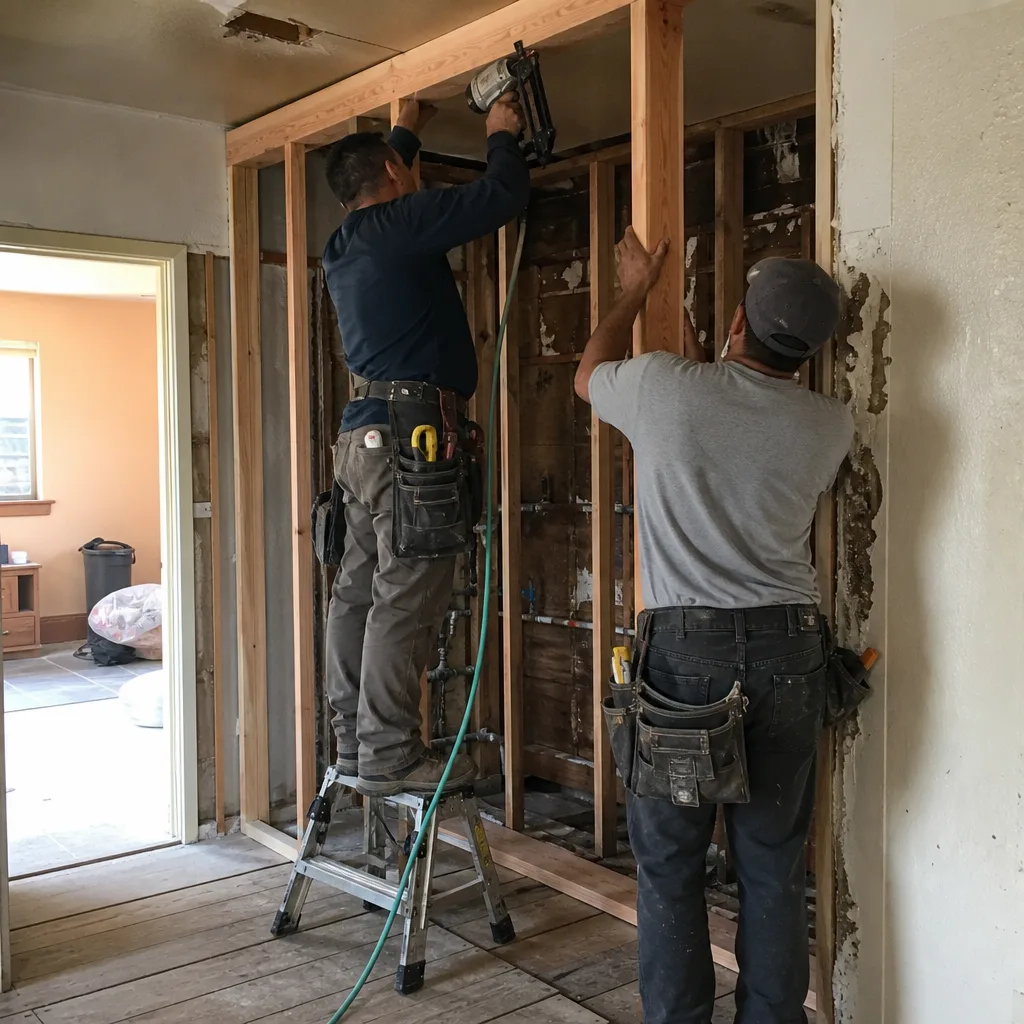
The lowest bid is rarely the cheapest project. Here’s a systematic method for comparing three contractor proposals without price bias.
Build a Scope Matrix
Create a spreadsheet with rows for every work item and columns for each contractor. Mark “included,” “excluded,” or “allowance” for each cell. Here’s a simplified example for a kitchen remodel:
| Work Item | Contractor A | Contractor B | Contractor C |
|---|---|---|---|
| Demolition and disposal | Included | Included | Excluded (owner responsible) |
| Electical panel upgrade | Included | Excluded | Allowance: $2,500 |
| Plumbing relocation | Included | Included | Included |
| Cabinets (named brand) | KraftMaid | “Cabinet allowance” | Wellborn |
| Countertops | Cambria 3cm | Caesarstone 2cm | “Stone tops” |
| Permits and inspections | Included | Excluded | Included |
| Project cleanup | Included | Included | Excluded |
In this example, Contractor C appears cheapest until you add the excluded demolition, the unspecified countertop, and the electrical allowance that typically runs $3,500-$5,500 in Escondido’s older homes with 100-amp panels. Contractor B’s “cabinet allowance” is a blank check. The matrix reveals what price comparisons hide.
Normalize for Quality Tier
If one bid specifies Kohler Purist fixtures and another specifies a builder-grade no-name, the price difference may reflect $800 in hardware, not $800 in contractor margin. Adjust your matrix to compare equivalent specifications, or request revised bids to a common spec list.
Factor Documentation and Process
A bid from a contractor who provides documented photo records on every visit, background-checked crews, and a live person answering calls 24/7 carries operational costs that appear in the price. The question is whether that documentation prevents the $8,000 change order that the undocumented contractor hits you with in month three. In our experience, it does.
Escondido-Specific Considerations: Climate, Codes, and Neighborhoods
Escondido’s geography and regulatory environment create specific conditions that affect contractor selection and project planning, as detailed in our Seasonal Construction Care for Escondido: Year-Round Homeowner’s Guide.
Climate and Material Selection
Escondido sits in a transitional climate zone, inland enough for summer temperatures above 90°F regularly, but with winter lows that can drop to frost. The combination of heat, occasional Santa Ana winds, and clay-heavy soils in many neighborhoods affects material choices and foundation work.
For roofing, the solar heat gain in Escondido makes cool-roof ratings worth the premium. GAF Timberline HDZ with reflective granules or Owens Corning Duration Cool shingles reduce attic temperatures significantly. A contractor proposing standard dark shingles without discussing this is not optimizing for your conditions.
For kitchen remodeling and additions, the clay soils in areas like Jesmond Dene and the hills west of Interstate 15 expand and contract with moisture. Foundation work requires specific engineering; a contractor without local pier-and-grade-beam experience may under-engineer the footing.
Code and Zoning Variations
Escondido operates under the 2022 California Building Code with local amendments. Key local considerations:
- ADU regulations - Escondido updated its accessory dwelling unit ordinance in 2023, allowing detached ADUs up to 1,200 square feet on single-family lots with reduced setback requirements. A contractor proposing an ADU without referencing the current ordinance may be working from outdated assumptions.
- Historic overlay districts - Old Escondido Historic District and certain parcels near Grand Avenue have design review requirements. Permits take longer, and contractors need experience with the Historic Preservation Commission.
- Hillside development - Properties with slopes exceeding 25% trigger geotechnical review and often require retaining wall engineering. A contractor who doesn’t mention this in the bid hasn’t checked the topo.
Neighborhood-Specific Notes
In Old Escondido, homes built 1890-1940 often contain knob-and-tube wiring, lead pipes, and non-compliant setbacks. Contractors need contingency planning, not optimism. In Harmony Grove and Daley Ranch-adjacent areas, fire-resistant construction materials are increasingly relevant for insurance compliance. In Del Dios and lake-proximate neighborhoods, humidity and soil stability create specific foundation and decking considerations.
A contractor who has worked in your specific Escondido neighborhood will know these conditions without research. Ask directly: “What issues did you encounter on the last project within two miles of this address?” The quality of the answer reveals the depth of local experience.
Common Mistakes to Avoid
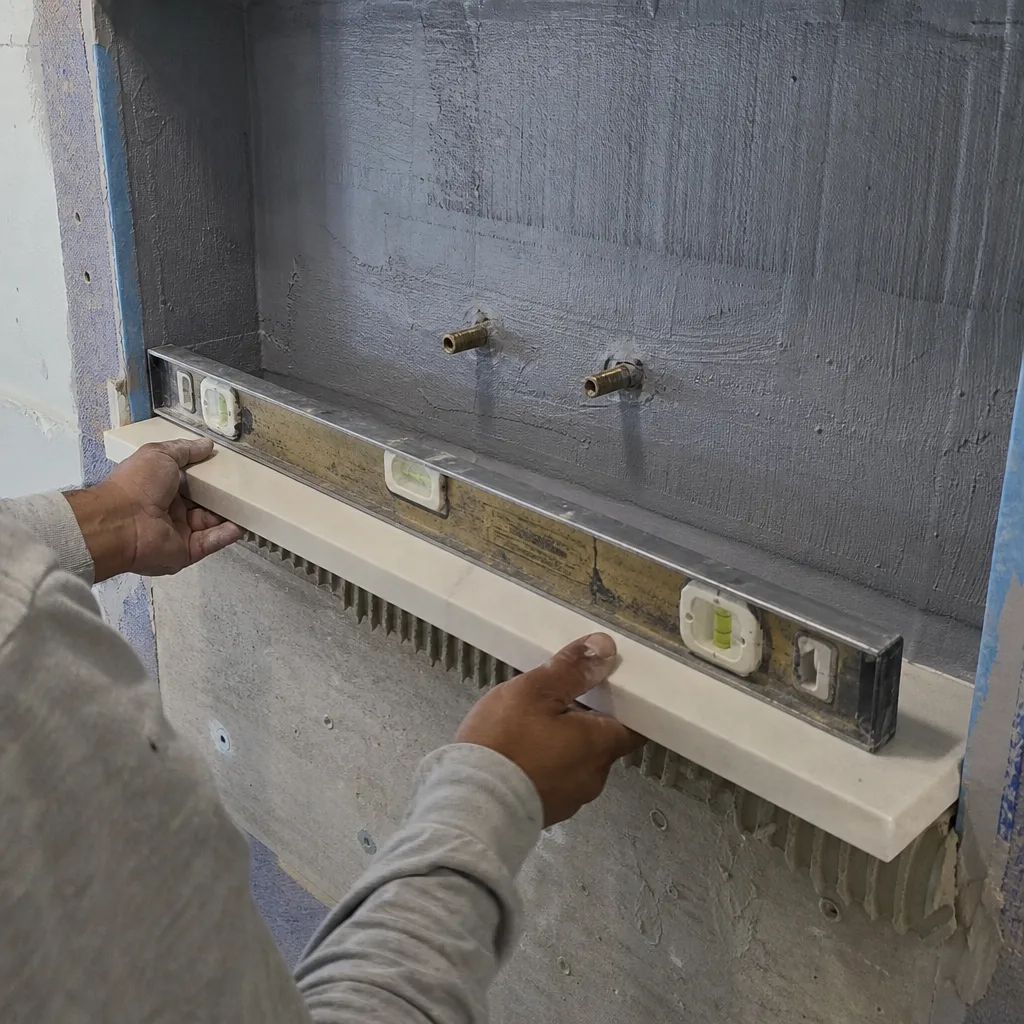
- Verifying the license but not the bond expiration date. An active license with a lapsed bond is legally the same as no license at all. Check both, every time.
- Accepting a bid with “TBD” or “allowance” for major items. Allowances transfer price risk to you without transferring decision control. Every major material should be specified or selected before the contract is signed.
- Paying the final installment before final inspection passes. Once you’ve paid in full, your leverage disappears. The last payment should be contingent on city sign-off, not just “substantial completion.”
- Hiring based on neighbor referral without independent verification. A contractor who performed adequately on a small fence job may lack the project management discipline for a $80,000 addition. Verify separately for each project type and scale.
- Ignoring the permit history for “minor” projects. Even a bathroom remodel requires electrical and plumbing permits in Escondido. A contractor who suggests skipping permits to save time is exposing you to insurance voidance, resale disclosure problems, and potential demolition orders.
- Comparing bids without a scope matrix. The $38,000 bid and the $52,000 bid may describe completely different projects. Matrix comparison prevents the false economy of apparent savings.
- Neglecting to name dispute resolution in the contract. When relationships sour, “we’ll work it out” becomes “see you in court.” Mediation clauses save months and thousands.
When to Call a Professional
Call a licensed construction contractor when your project involves structural modification, electrical or plumbing work, roofing replacement, or any work requiring a city permit. In Escondido, this threshold is lower than many homeowners assume: even window replacement in some zones triggers Title 24 energy compliance documentation.
Specific scenarios that demand professional engagement: foundation cracks with vertical displacement, roof leaks that have penetrated decking, electrical panels with aluminum wiring or insufficient amperage for modern loads, any project in a historic overlay district, and ADU construction where setback calculations affect legal compliance.
Rowan Construction Group Escondido offers free estimates in Escondido and surrounding communities. Every estimate is a written flat price with line-item scope, delivered before any work starts, backed by our 365-Day Done Right Promise. If you’re comparing bids or need a Free Second Opinion on any written estimate, call (858) 683-6538. We’ll review competitor documentation line by line, at no charge, so you can make a decision based on evidence rather than enthusiasm, and explore our more guides & resources for additional homeowner support.
Frequently Asked Questions
Kitchen remodeling in Escondido typically ranges from $35,000 for a mid-grade refresh to $85,000 for full gut renovation with layout changes; bathroom remodeling runs $18,000-$45,000; roofing replacement averages $12,000-$28,000 depending on pitch and material; and home additions including ADUs start around $180 per square foot for basic construction, escalating with complexity and finish level. Call (858) 683-6538 for an exact quote - estimates are free.
The price should not change unless you request a modification, and even then, no change proceeds without a signed change order stating the new price. At Rowan Construction Group, this is Clause 1 of The Haven Standard. We’ve maintained project costs within a few percent of the agreed price across 4,000-plus jobs by enforcing this discipline. Call (858) 683-6538 to schedule your free estimate.
Yes. Rowan Construction Group pulls all required permits and schedules all inspections as standard practice, included in the written quote. The permit history is documented in your project file, and you receive copies of all inspection sign-offs. Working without permits voids homeowner’s insurance and creates resale complications in Escondido’s disclosure environment. Call (858) 683-6538 to discuss your project.
A typical kitchen remodel in Escondido takes 6-10 weeks from permit issuance to final inspection, depending on material lead times and inspection scheduling. Bathroom remodels run 3-5 weeks. Roofing replacement is usually 2-4 days for standard single-family homes. Additions and ADUs extend to 4-8 months with full design, permit, and construction phases. Your written quote includes a timeline with milestones. Call (858) 683-6538 for project-specific scheduling.
Verify the six- or seven-digit CSLB license number at checkthelicensefirst.com, confirming active status, current bond, active workers’ compensation or valid exemption, and matching business name and address. Check for disciplinary actions. Cross-reference permit history through Escondido Development Services to confirm projects close with final inspection. These three checks take under 30 minutes and eliminate most problematic operators. Call (858) 683-6538 if you need guidance on verification.
California law limits home improvement deposits to 10% of the contract price or $1,000, whichever is less. A contractor requesting more is either violating state law or demonstrating insufficient capital to float material purchases. Either way, decline. Reputable contractors in Escondido operate within these limits and structure progress payments around inspection milestones. Call (858) 683-6538 to discuss standard payment structures.
The Bottom Line
Hiring a construction contractor in Escondido is a documentation exercise, not a personality assessment. Verify the CSLB license and bond. Pull the permit history. Request and read the insurance certificate. Sign only contracts with line-item pricing, signed change orders, conditional lien releases, milestone-based payments, and written dispute resolution. Compare three bids with a scope matrix, not by bottom line. The contractors who welcome this scrutiny are the ones who’ve built systems to support it. The ones who resist have reasons, and those reasons rarely benefit the homeowner.
At Rowan Construction Group Escondido, we’ve operated under these standards since 2007, across 4,000-plus projects, with every price in writing before work starts and every change documented before it proceeds. The Haven Standard isn’t a slogan. It’s a terms page, and we reference it by clause because specificity is the only protection that holds up in practice.
Written by Grant Rowan, Owner at Rowan Construction Group Escondido, serving Escondido since 2007.